
Following the Blossom at Saarang
Most days at Saarang begin with a flower. Before the sun is properly up, the red powder puff trees are in bloom and the banana plants are waiting, and the first guests are already on their way.
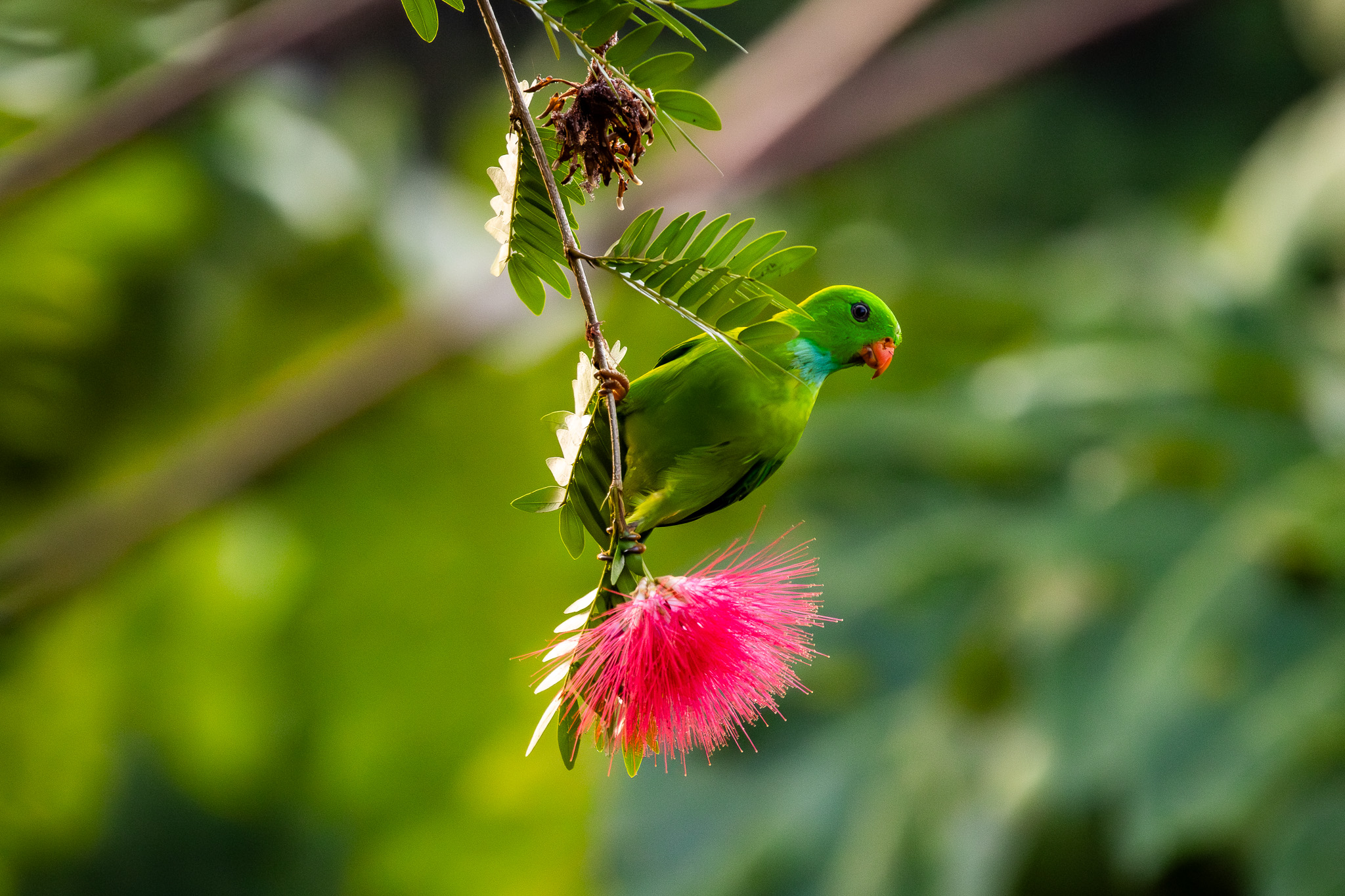
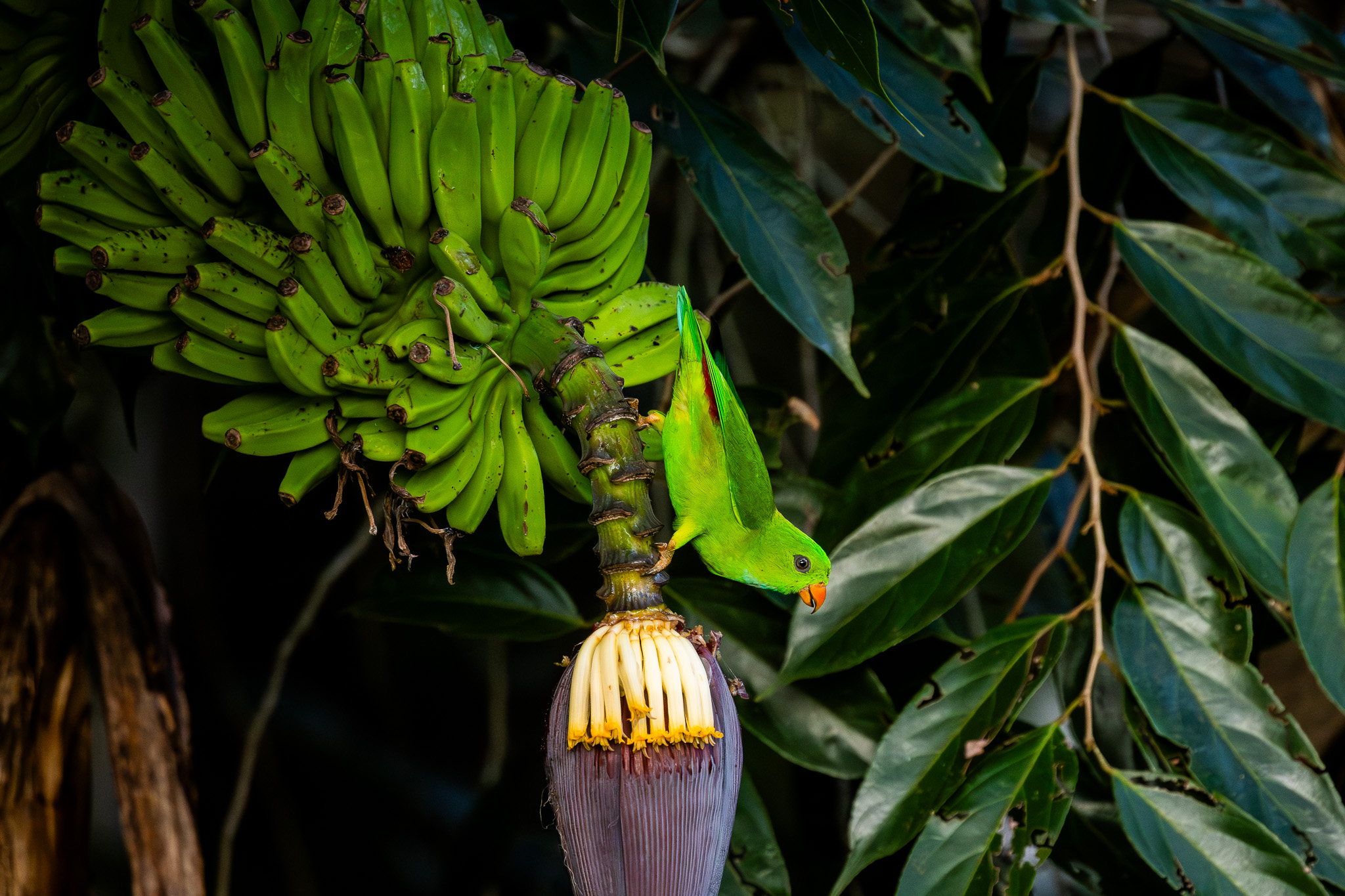
They arrive small and green. Vernal Hanging-Parrots, among the smallest parrots in India, drop in by the dozens and disappear into the leaves. They are after nectar, first from the powder puff blossoms, then from the small white flowers of the banana. They hang upside down to reach it, and they sleep that way too, like bats. Nobody is sure why. The best guess is that a green bird hanging still looks like a leaf.
By mid-morning the shift changes. Loten’s Sunbird, found only in southern India and Sri Lanka, takes over the flower beds around the Birdwing Farmstay. Its long, curved bill is built for flowers, and every visit carries pollen to the next one. It works the same beds from morning to evening, so the garden gets pollinated while the bird gets fed.
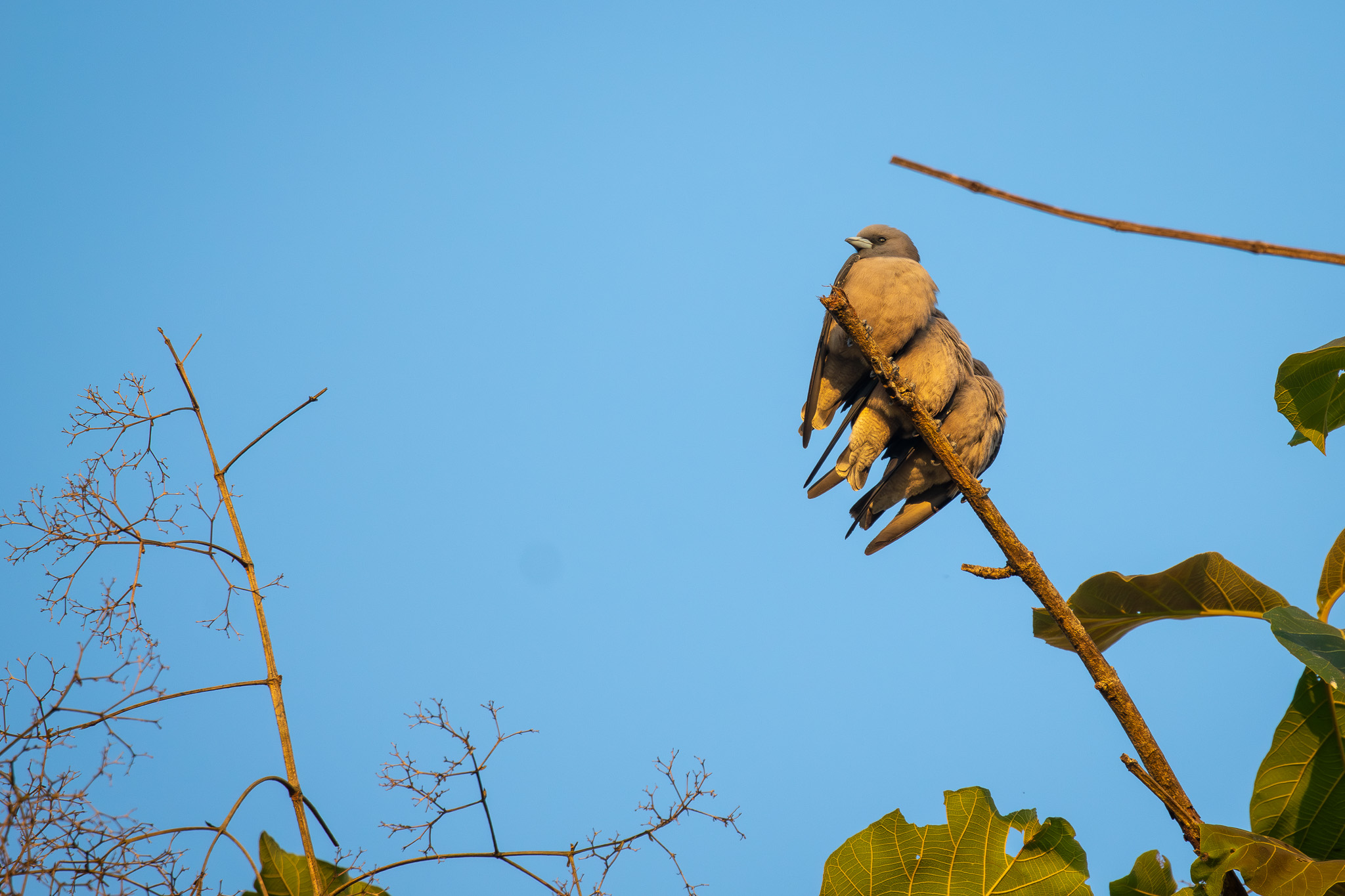
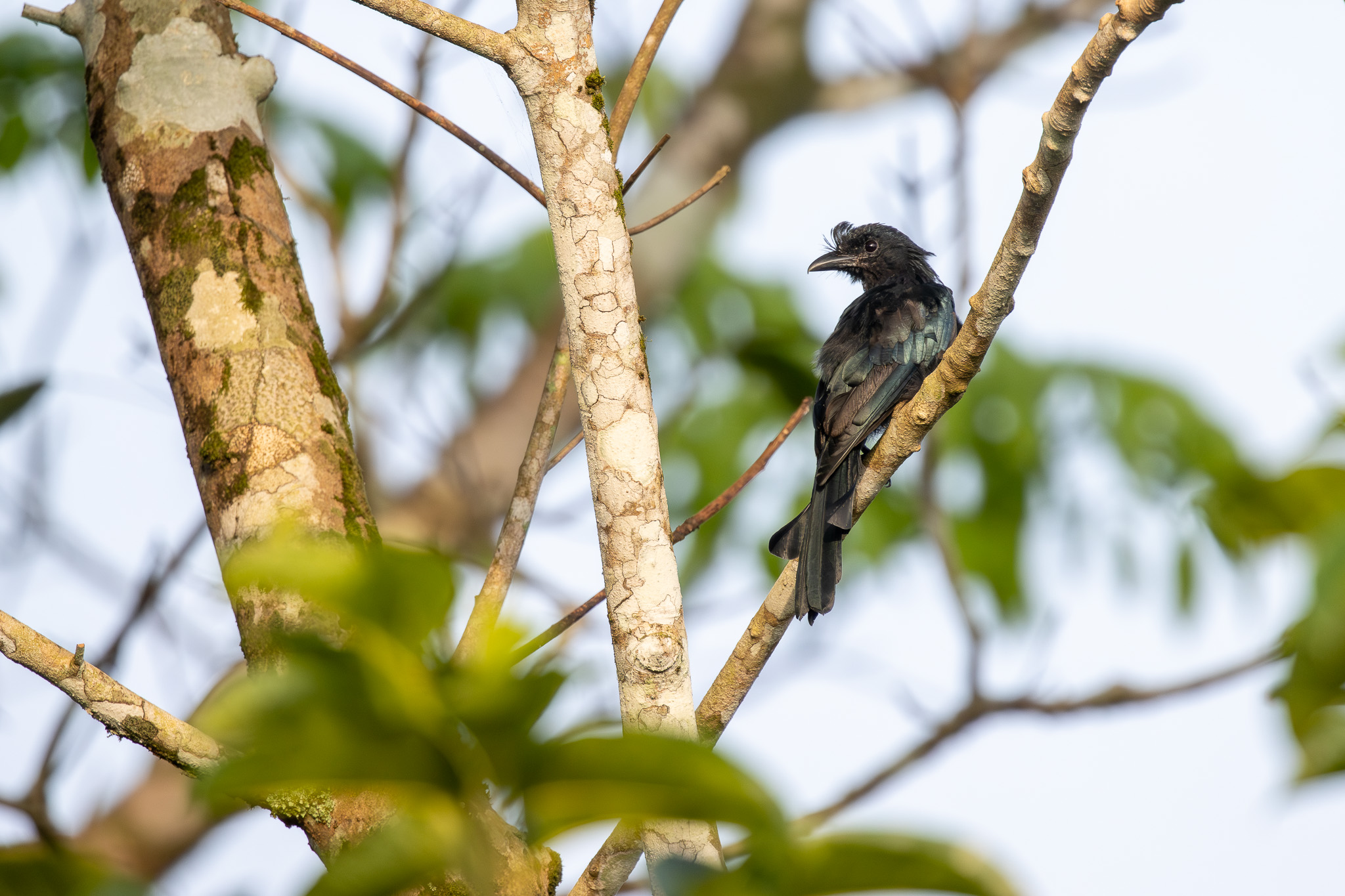
Flowers draw insects, and insects draw the woodswallows. Ashy Woodswallows sit in rows on the high-tension wires near the site office, launch after something small in the air, and return to the same spot. Wires are their usual perch, which is why a picture of one on a tree branch is a rare thing. The Greater Racket-tailed Drongo works the same airspace and, if it feels like it, copies the calls of other birds.
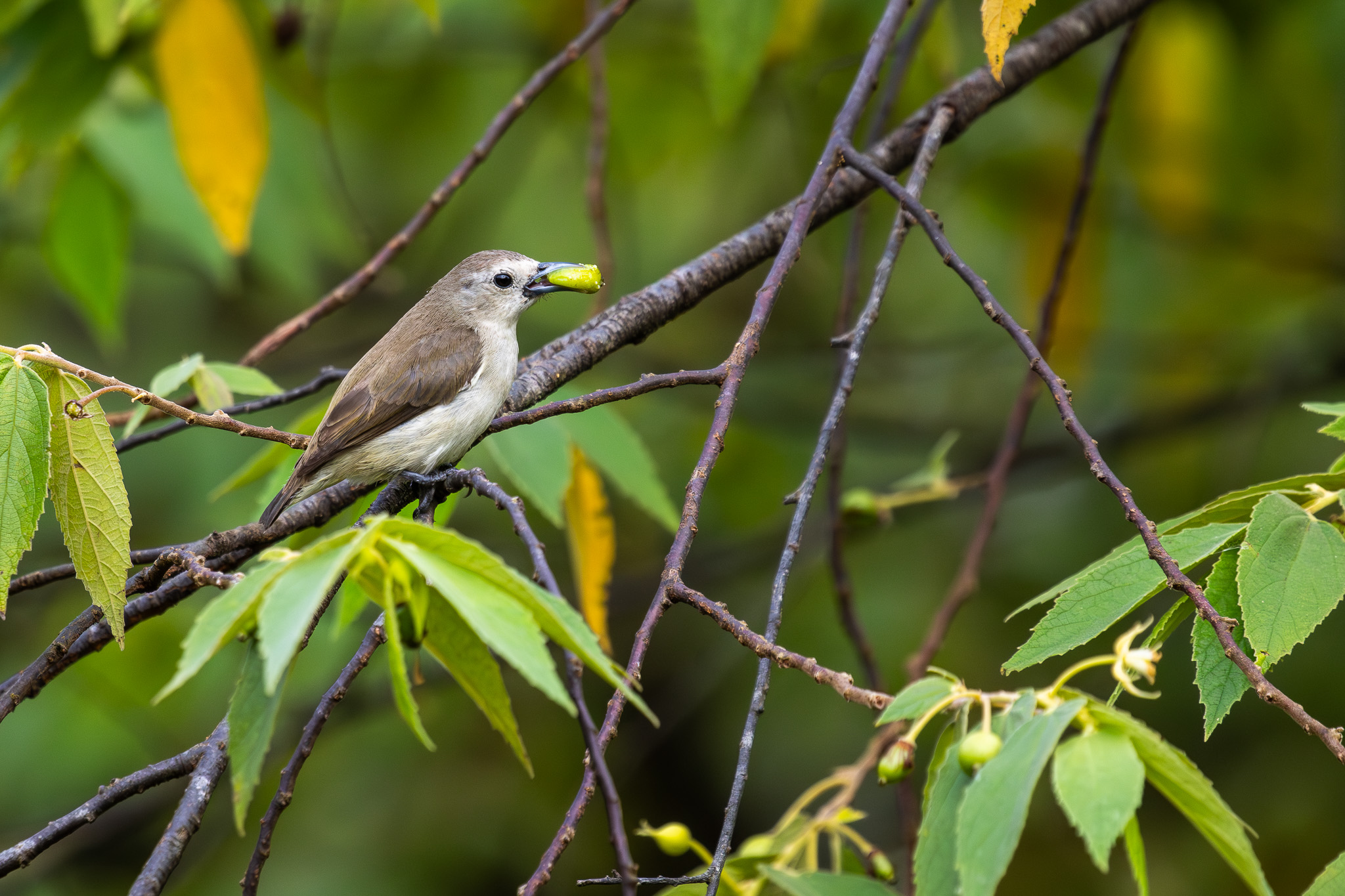
Then the flowers turn to fruit, and a different crowd arrives. The tiny Nilgiri Flowerpecker goes after berries and nectar in the canopy. The Malabar Pied Hornbill swallows fruit whole and drops the seeds far from the parent tree, which is how large trees spread. Hornbills also nest in tree hollows, where the female seals herself in with mud and the male feeds her through a narrow slit until the chicks are ready. A bird like that needs big, old trees to exist at all.
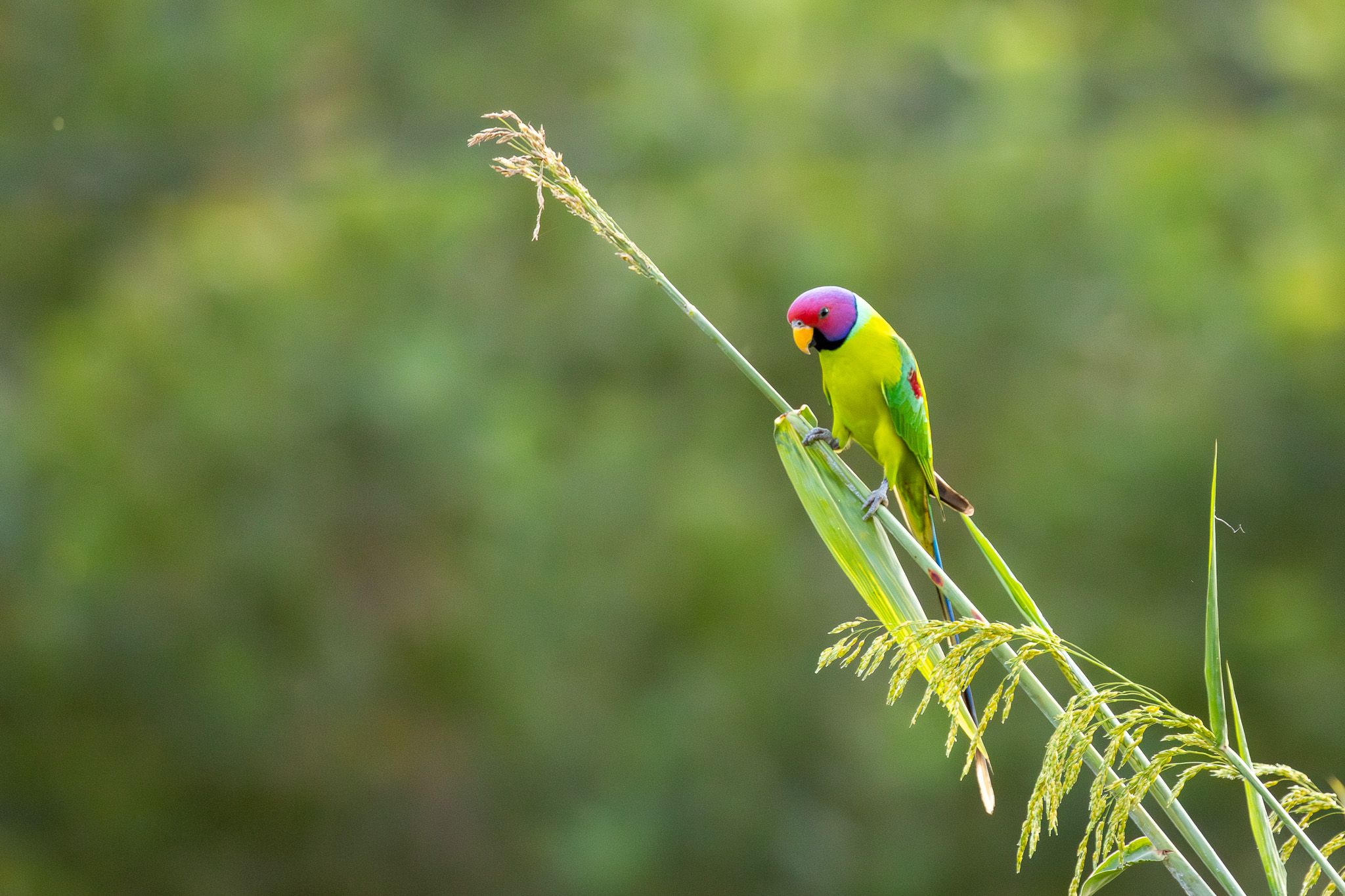
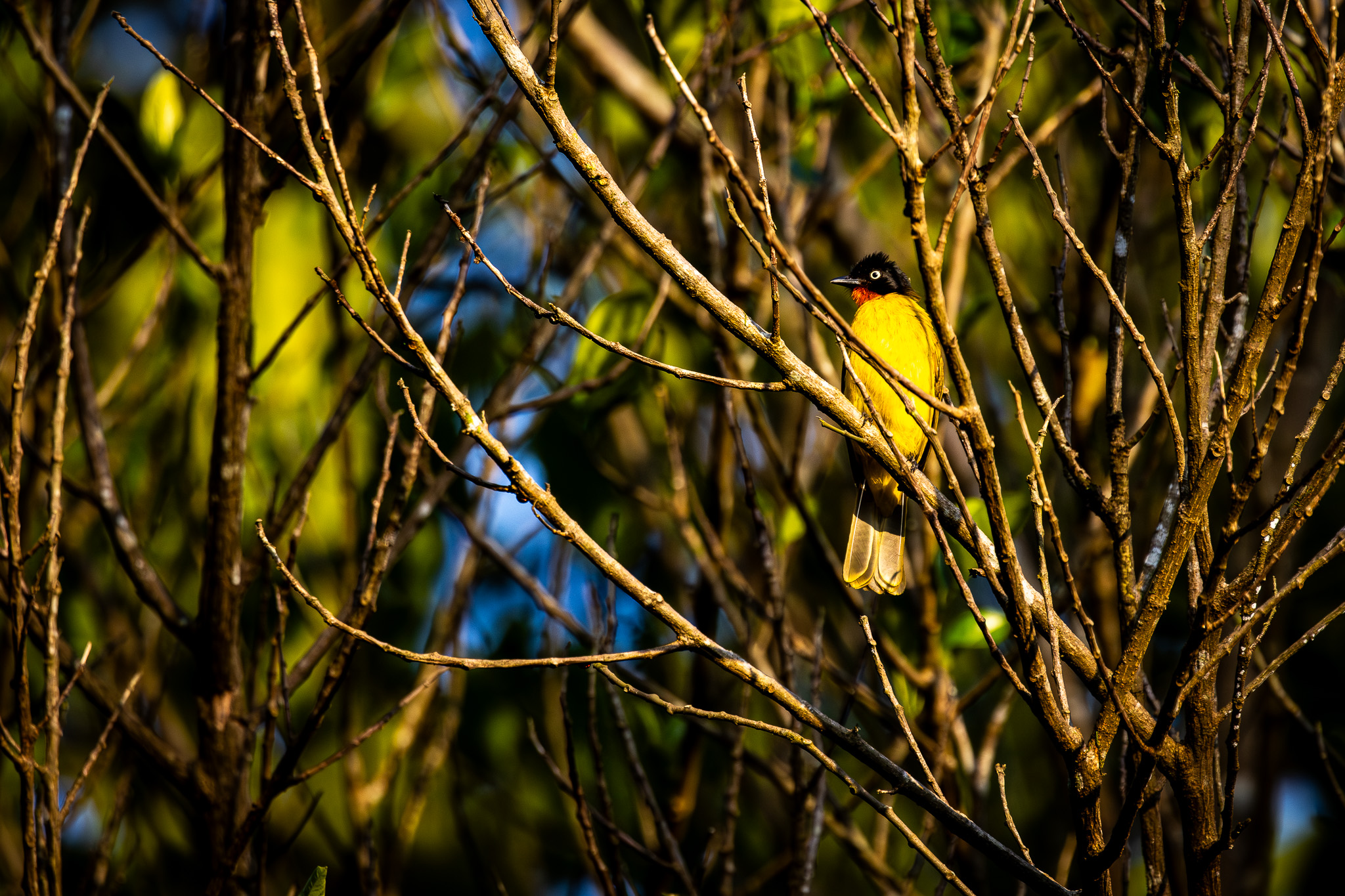
Below the canopy, the leftovers feed the next tier. The Flame-throated Bulbul, found only in the Western Ghats, works the undergrowth for fallen fruit and insects. On the trunks, the Malabar Flameback hammers out insects and, in time, nest holes. When woodpeckers move on, those holes get a second life as homes for other birds, parakeets among them. Plum-headed Parakeets are easy to hear before they are seen, moving through the trees in noisy flocks.
A few visitors only stop by. The Heart-spotted Woodpecker, small and crested with heart-shaped markings, has been spotted only a handful of times. The Siberian Stonechat is just as scarce. It breeds far to the north and travels thousands of kilometres to winter in the south, and Saarang is one of the places it has chosen to stop. Rare birds keep their own schedule, and the migratory season has only just begun.
Twelve of Saarang’s 27 acres are food forest, planted so people can eat from the land. The birds, it turns out, are doing the same.
At dusk, the parrots come back to the powder puff trees, and the place gets loud again.


Leave A Comment