
Bangalore’s Greenest Homes
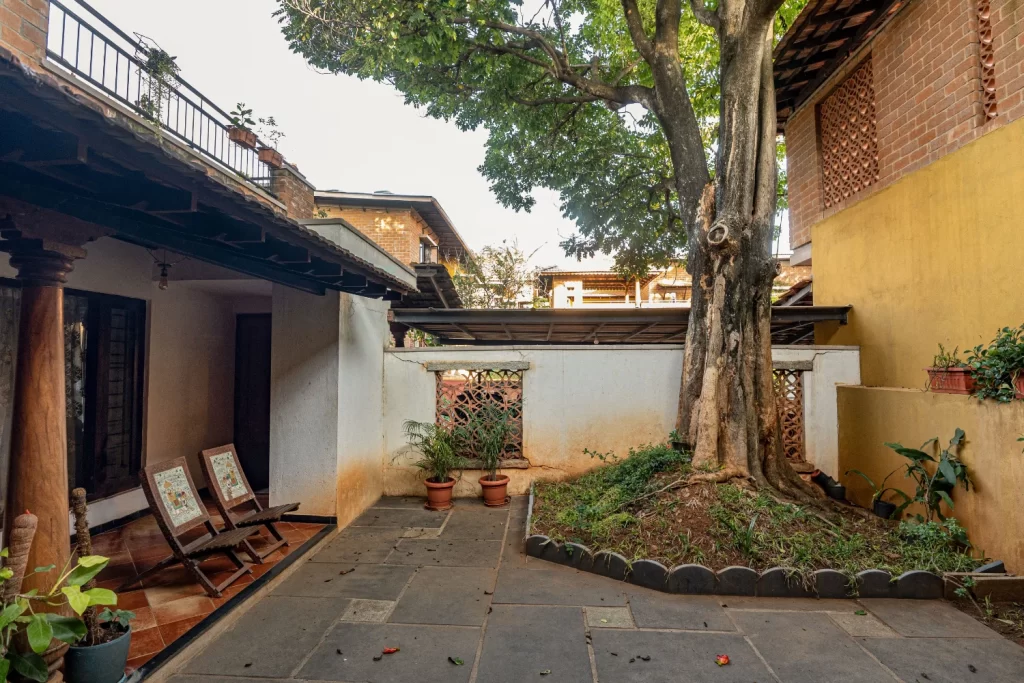
food on space that is half as big as the house! From Solar panels to RWH, a big green space to going organic with their eating habits, P.G. Ganapathy’s home at Kengeri does more with a whole lot less.P.G. Ganapathy, an IIT Madras graduate who now works as a senior advisor at the Indian Institute Of Human Settlements (IIHS), had always been quite keen on living more sustainably.
Green House Effect
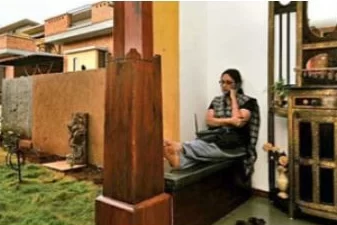
If architectural trends reflect the consciousness of the times, we’re entering an era of heightened ecological sensitivity. TAs you step into artist Vishakha Chanchani’s house in Kengeri on the outskirts of Bengaluru, it feels as if you have retreated from the noisy urban milieu into a verdant paradise. Part of the Good Earth Enclave, hers is one of several green houses in this ecologically sustainable commune.
Sustainable living
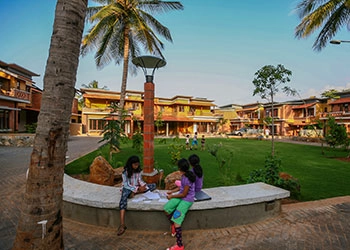
GoodEarth Malhar envisages a neighbourhood filled with a group of like-minded people who will take the idea of sustainability forward. Here, everyone must share pride, and a sense of caring for the earth. Good Earth Malhar envisages a neighbourhood filled with a group of like-minded people who will take the idea of sustainability forward. Here, everyone must share pride, and a sense of caring for the earth.Malhar is an ecovillage spread over 50 acres of land, which will be developed in a phased manner.
Putting life back into the earth
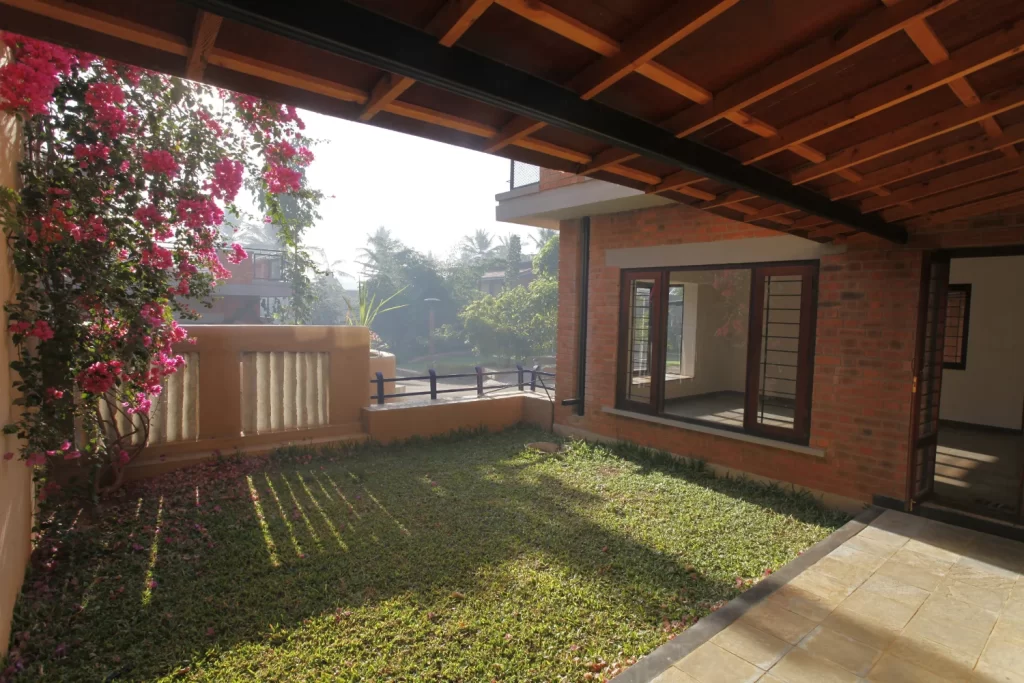
At a time when construction is all about the right location and prime time amenities, the few good soldiers who cling on to doing the right green thing, are spoken and written about. R S Ranjeetha Urs elaborates on what one of them Good Earth Orchard is all about. TWith the land resource becoming scarce by the day, its price has skyrocketed, leading to a widespread spurt in the growth of urban sprawl. Consequently, there is great stress on the city centres contributing to high density housing.
A way of living with nature and friends
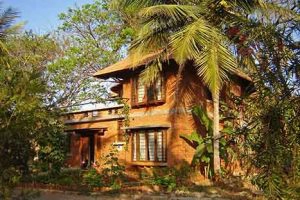
In the interiors of Kengeri, on the outskirts of Bangalore, one can see several houses spread across three acres of land in the midst of canopied trees, quite unperturbed by the usual city noises. Things seem to unfold here at an altogether different pace and have its own rhythm! This is the ‘Good Earth’ project, a brain child of Jeeth Iype, an architect and a couple of his like minded friends, who were aspiring to live in an eco-friendly environment.
Lost in nature
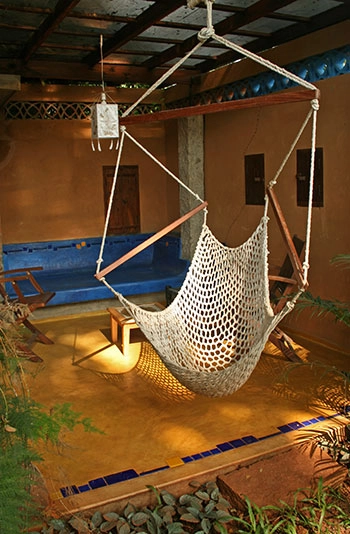
Thanks to the highrise apartment culture, people have also forgotten how living with nature can be a joyful experience.But as I turn left from the Bangalore Mysore road, just after Kengeri, and absorb the scenic beauty that rolls by my window, I am quick to realise that there are some people who haven’t blotted out the goodness of the earth from their memory or their way of living. “We are engaged in bringing together like-minded people with a common vision of building a sustainable future,” says Stanley George, the MD of GoodEarth.
Controlling the process of Sustainability
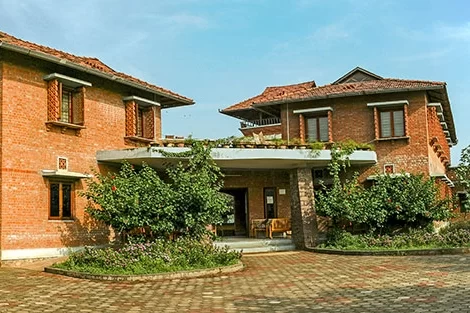
In concluding part of the series on Sustainable Architectural Practices, Himanshu Burte looks at the work of development firm Good Earth which has been trying to change the consumption pattern in the building process. Business, especially real estate development, is often blamed for the current ecological crisis. That criticism is true to a large extent. The logic of free market economics has always been centred on profit. Non-capitalist systems too have pursued economic sustainability at the cost of ecological sustainability.
Very nature driven homes
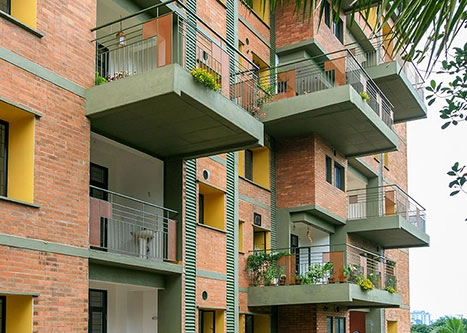
ARCHITECTURE Earth-friendly buildings that are people friendly too; that is what team Good Earth is doing. Shilpa Nair Anand learns that they were selected as one among four innovators globally by Time Magazine.Good Earth’ has a nice ring to it, it conjures up ideas about being fair, being considerate about caring for earth. The philosophy behind it, architecture is “not just building, it is also about building life or creating community living,”, says Mathew Varghese, Director – Operations ‘Good Earth’.
Towards a Sustainable Future
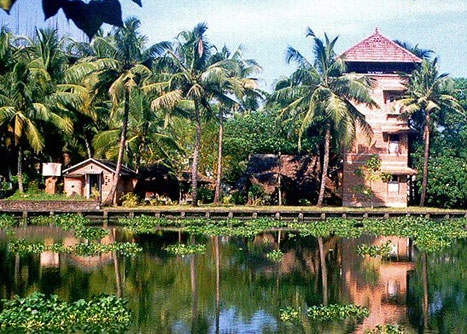
A community more than a firm, the Kerala-based Centre for Eco-sensitive and Sustainable Development (ESDC), acquires its resources from the natural landscape and in return gives back a construction typology. On the banks of the Kaniampuzha river, in Ernakulam, Kerala, stands the Centre for Eco-sensitive and Sustainable Development (ESDC),which was started in 1987 by a group of architects, engineers and artisans. Inspired by the work of Laurie Baker, the group looks at architecture as a lifestyle, which relates to the psychological and cultural sensibilities of people and at the same time maintains harmony with the environment.
GoodEarth Hamlet
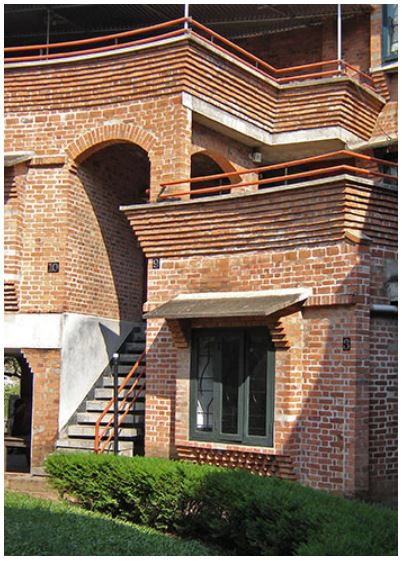
Kerala brings to mind images of serene backwaters, of lush green paddy fields, and a rich heritage of traditional architecture. But in Cochin, one of the fastest growing cities of Kerala, these images are being replaced by images of polluted backwaters, congested roads, and multistoried buildings.